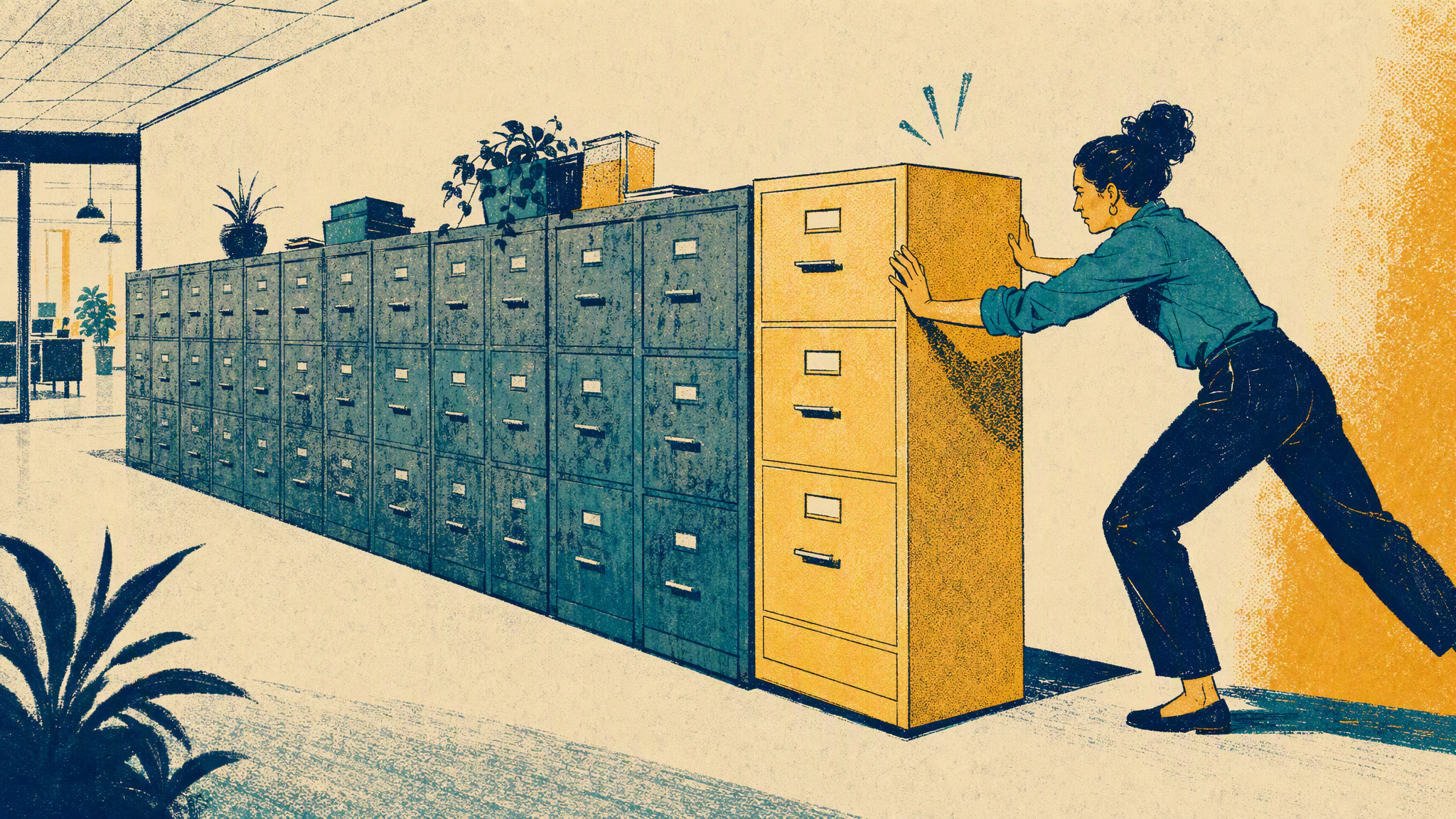
The ticketing system you know is an application
App Engine is how a ServiceNow customer builds their own applications on the same platform ServiceNow's own products are built on. Incident, problem, change and the service catalog are applications. They sit on a layer of tables, a workflow engine, an access control model and a user interface that generates itself from the data model. App Engine hands that layer to you.
That framing matters because of what it implies about effort. When your service desk opens an incident, nothing about that form was written by hand. The form is generated from the incident table, the assignment rules read the same group records every other application reads, and the approval a manager taps on their phone is the same kind of approval record any application on the instance produces. The ITSM applications are configuration on top of a platform you are already paying to run.
So a custom application here does not start with a blank screen and a login page. It starts with a table. Define the table and the list view, the form, the search, the audit history, the REST interface, the import path and the permission checks already exist for it before you have configured a single rule.
What you actually inherit when you create a table
The biggest single thing you get is the task model. Extend Task and your records arrive with a number, a state, an assignment group, an assigned-to, work notes, an activity stream and attachment handling. Every list filter, every dashboard widget and every service level definition that already understands task records now understands yours.
The workflow engine is the second piece, and it saves the most calendar time. Flow Designer runs against your table the same way it runs against change requests. Approvals land in the approval list people already check every Monday, delegation during holidays works because the platform owns that behaviour rather than each application reimplementing it, and the escalation after four days uses the scheduled job machinery that was already running.
Then there is the front door. A record producer puts your application in the service catalog people already use, so the request for a new laptop and the request your team invented sit on the same page, in the same search, with the same mobile experience. Nobody gets a new address to bookmark, a new password or a new piece of training.
Access control is the quiet one. Rules evaluate on the table and on the field, so they hold whether the record arrived from the form, the mobile app, an integration or a background script. You inherit the instance's single sign-on, its group memberships and its audit trail at the same time, which is often the difference between a compliance review that takes an afternoon and one that takes a month.
The disposal request that took four weeks
I spent most of a year at a specialty chemicals manufacturer with eight plants and a ServiceNow instance that only served IT. Their controlled equipment disposal process lived in a shared mailbox. Someone emailed a request to scrap a piece of process equipment, an engineer replied, a plant manager replied, the environmental health and safety lead replied, and three months later nobody could reconstruct who had approved what.
We built it in App Engine. One table extending Task for the disposal request, a child table for the items on it, a record producer in the catalog, a Flow Designer flow with three sequential approvals, and reference fields to the configuration items and locations already held in the instance. Two people, four weeks, and one of those weeks went on a data quality argument about plant codes.
The build stayed small because most of it was not ours to write. Approvals went to the list the plant managers already opened. Delegation during the August shutdown worked without anyone asking for it. The report the safety lead needed turned out to be a saved list view with three filters, because the platform had been writing the audit history the whole time. The genuinely hard part was the link to equipment records, since the CMDB ownership question had never been settled and one reference field made it everybody's problem at once.
The bill arrives in two places
Custom applications are licensed separately from the ITSM product you already bought. Establish which of your people count before you design anything, because a request any of eleven thousand employees can submit prices differently from one that forty engineers work on. Get the population and the counting method priced in writing while you still have the option of not building. Licensing surprises on this platform arrive at renewal, long after the design is fixed.
The second cost is the pull. Once a team has a platform that can hold any request-shaped process, every request-shaped process wants to move there, and the next application feels free because the contract is already signed. I have walked into instances carrying sixty custom applications where the platform team could name a current owner for perhaps fifteen of them.
Every one of those has to be regression tested at each family release, twice a year, for as long as it lives. An application that took four weeks to build can cost a few days of testing every six months, and the people doing that testing are the same people you wanted building the next thing. The low-code app that quietly became a project is the same story on a different platform.
When the request is really a process problem
App Engine earns its place when the work runs request, approve, assign, do, close, and when the records have to relate to people, locations, groups or configuration items the instance already holds. If your process touches those objects and ends in a decision somebody will be asked to justify, building elsewhere means importing all of that and keeping it fresh forever.
It is the wrong home when another system already owns the record. Purchase orders belong in the ERP even when the requisition starts here. High volume transactional work and customer-facing products with their own visual design will fight platform defaults at every screen, and you pay for that fight again at every upgrade.
The harder case is a request for an application that is actually a disagreement nobody has settled. A team at that same manufacturer asked for a vendor onboarding app. Four workshops in, we still had two managers who each believed they made the final call on a new supplier, and a finance lead who thought the whole thing already ran in the ERP. Building the app would have written that confusion into a workflow and made it permanent.
The test I use now is plain. Ask three people who do the work to describe, separately, what happens when a request is rejected. If the answers differ, you have a process problem, and software will make it more expensive rather than clearer. Settle the decision rights first, then argue about where the logic should live.
What to draw before you open the studio
Before anyone opens App Engine Studio, draw the record's path on a whiteboard with the people who will live with it. Who creates it, who approves, in what order, who does the work, what happens on rejection, and which existing records it has to point at. Six boxes, one hour, everyone in the room.
If that drawing comes together in an hour and the only real problem is that the process currently lives in a mailbox, building it on the platform is probably the fastest honest route you have, because most of what the application needs is already running. If the drawing takes four sessions and two people still disagree about box three, you do not have an application requirement. You have a meeting to hold, and holding it costs less than the licence.