
Work IQ lets Copilot write back to your source records
Work IQ public preview opens September 30 with governed actions that write changes back to source records inside the permissions your users already hold.
Topic coverage
Source-linked reporting and practical patterns organized around a shared enterprise applications question.
Work IQ public preview opens September 30 with governed actions that write changes back to source records inside the permissions your users already hold.

An ODP security check has landed in SAP EarlyWatch Alert, putting a June note about unchecked RFC callers in front of people who never read the patch queue.

Oracle says the Manchester arena has connected Simphony to NetSuite. The release skips every number a finance architect would need to judge it.

Business Central 2026 release wave 2 lets AL queries choose an isolation level. The default stays ReadUncommitted, so your existing queries read dirty data.

Oracle added Quorum Health to an existing Fusion Cloud footprint. Independent counts put Oracle down 56 hospitals in 2025, a third straight year of decline.

Salesforce claims three times fewer errors on CRM actions for Koa. That figure comes from Salesforce's own CRM benchmark, not an independent one.

Microsoft published real traffic and server load figures behind Copilot Studio agent flows. The load drop matters more than the 72% cost headline.

San Juan Regional's bed-assignment and EVS response times dropped sharply one month after go-live. The third metric in the same release barely moved.

Dynamics 365 Activate profiles a company's whole Salesforce data set before migration starts, already at billions of records. That access needs scrutiny.

Microsoft's Activate preview automates Salesforce-to-Dynamics 365 discovery. The ownership, mastery, integration, and rollback questions come first.

Salesforce's six-part enterprise AI model lists Trusted Context first. Our read: what an agent can see and understand is the limit of what it may do.

Microsoft's Activate preview surfaces Salesforce customizations before the first workshop. The first review has to ask which need each one met.

Salesforce's AI Control Plane will observe agent behaviour and outcomes. Explaining a single action needs a per-call record the post never describes.

An accurate CMDB is a precondition, not a benefit. Discovery repays the spend only where change, triage, licence position or security response consume the data.

Data that drives segmentation, routing or an agent belongs next to the action. Data that only feeds a report is a second copy you pay to keep.

A human reads around a bad knowledge article. An agent answers from it, which turns knowledge quality into an accuracy problem with a blast radius.

SAP numbers are only correct because of the logic around them. Decide which questions need that logic and which cross systems SAP never sees.

One CMDB for ServiceNow CSM and ITSM saves real work until permissions, reconciliation and asset ownership pull the two populations apart.

Running NetSuite and Fusion Cloud side by side is survivable, but only if one ledger owns consolidation and the group close accepts the slower system's calendar.

Most reporting on Dynamics 365 and Dataverse data never needed a data platform. Copying it out earns the cost only when history, joins or scan volume demand it.

Record types or separate objects, contacts who exist nowhere, entitlements you may not need. The Case model choices that fix what you can report on for years.

Employee Central owns the person and S/4HANA owns the identity you post against. The replication between them is where the money quietly leaks.

Workday already enforces who may see whose record. Copying worker data out buys you joins and hands somebody the job of rebuilding that access model.

SharePoint lists are the right store more often than architects admit. Delegation limits are where they quietly stop being right, and nothing errors when they do.

Companies replace their CRM every seven to ten years, and the way they decided to represent a customer survives every one of those migrations.

Two analysts pull the same headline figure and get different answers because the filter, the date field and the definition were never written down or owned.

A decision framework for the Dataverse call every team faces, when a requirement belongs as columns on Account and when it needs its own table.

OTBI and BI Publisher belong on open work. Once a request needs closed periods or data Fusion never held, build the extract instead of the report.

A decision framework for splitting a Salesforce org, and an honest look at what the split really costs once you're running two systems instead of one.
Routing rules pile up one exception at a time until nobody can explain why a lead landed where it did. Here is how to find the rule that actually ran.
Before a Power Platform or SAP roadmap gets sequenced, list every flow it touches with a source of record, a consumer, and the person who fixes exceptions.

Sales and service can keep their own screens. They have to share the customer identifier, the lifecycle states, the conflict rule, and the correction path.

A Power BI tile earns its place by naming the decision it changes, the value that triggers it, and the person who acts. Everything else is a report.

The parallel runs, per-element tolerances, and sign-offs that decide whether a Workday or Oracle HCM payroll go-live is safe, and who should own each one.

Let Power BI read a copy of S/4HANA history, keep the signed number in the Universal Journal, and show extract time and tie-out status on pages that mix them.

A blank escalation reason usually marks a case that skipped its normal owner. Name what the blank means and route it before you make the field required.

Sales, finance, and operations each hold a correct definition of revenue. A semantic model picks one and hides the rest, so name a steward before it does.

Two correct figures for the same measure differ on timing, population or attribution. Find which one, write the definition down, then name an owner.

Subsidiaries should track legal entity structure, not divisions. Settle the hierarchy, base currency and access design before the first transaction posts.

Most CMDBs are partly wrong, and the workarounds cost more than the errors. Where the effort pays: identification, relationships, precedence, retirement.

A query your data source cannot evaluate still returns an answer, built from part of the table, and sample data will never show you the gap.

Decide what moves before you touch a mapping rule, read the merge output yourself, and verify against totals the business already argues about.

Most slow NetSuite saved searches read far more than anyone needs and throw it away. Fix the date bound and the filter placement first.

Integration Center handles a scheduled extract well. The entity you pick, the as of date and the failure email decide whether anyone can trust the file.

Most slow Workday reports retrieve far more than the question needs and then discard it. Fix the data source and the filters before you touch the columns.
Most Dataverse growth comes from attachments, audit rows, trace logs and environments nobody deleted. The per-table view in the admin center names yours.

One clean parallel cycle proves very little. Build the cases that break payroll into the run, then triage every variance before anyone signs.

Most mock loads are built to pass. A rehearsal proves something only at full volume, on the real cutover clock, with the awkward records left in.

Dataverse gives you a relational model, row and column security, and rules that hold whoever wrote the record. A five person spreadsheet needs none of it.

Plenty of Dataverse walls are a training or licensing problem. Pay for outside help when the model, the security map, or the scale is beyond your team.

Fusion Cloud is several application families sharing one platform, so saying you run Fusion tells nobody which ones you actually bought.

A reorg breaks employee feeds that were built against last year's org chart. Pick keys and reconciliation that outlive the chart.

A full governance program takes years to fund. Material and vendor master ownership is where an S/4HANA team can start this quarter.
Power BI can only answer what the Dataverse model was built to hold. Write the leader's questions first, with the decision, grain, and freshness each needs.
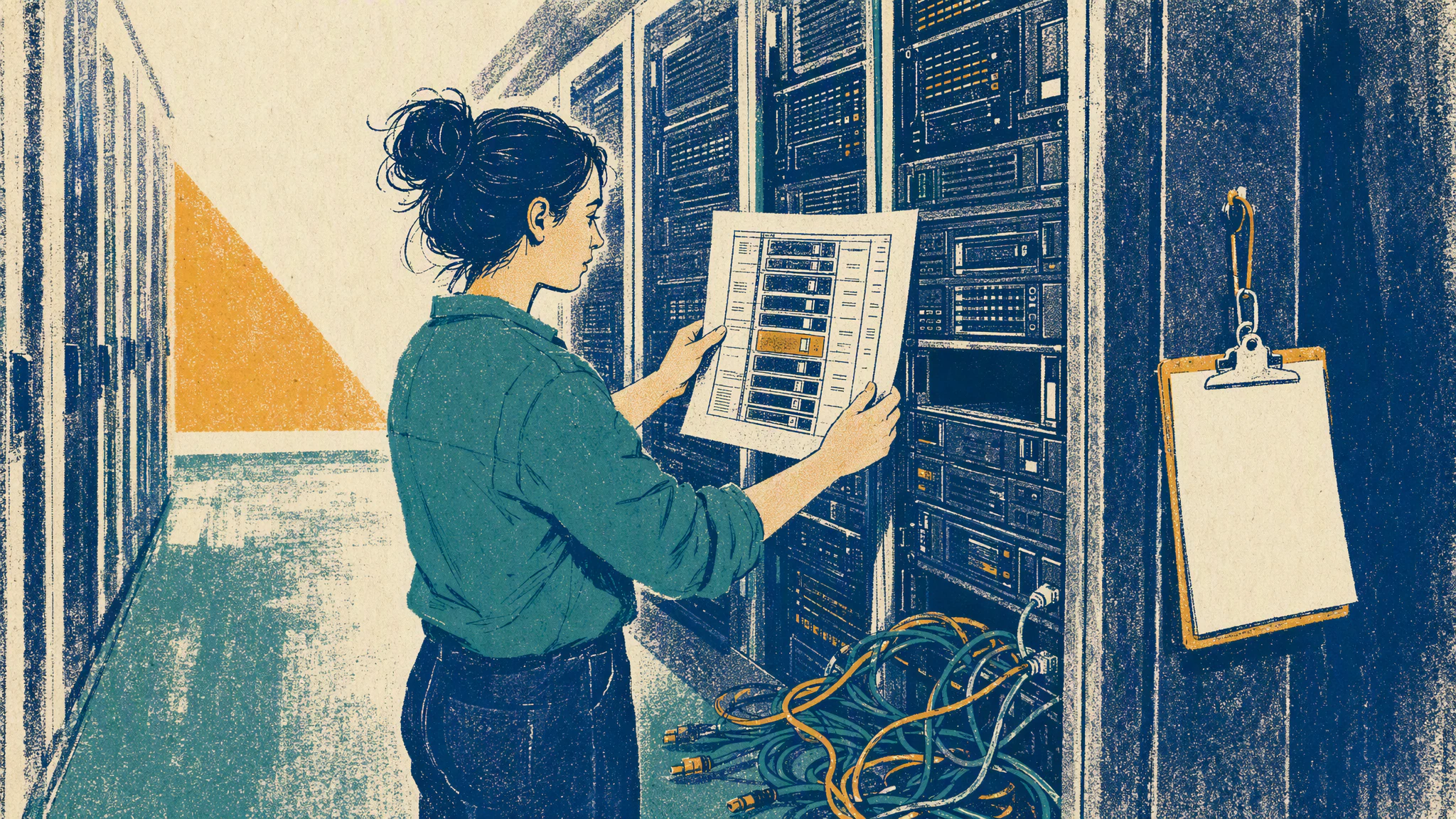
An agent assessing change impact trusts every CI and relationship it finds. Fix class ownership and identification rules before it goes live.

Match on the number the business already reads out, enforce it as a unique field on both sides, and test the missing, repeated, and near-twin key first.