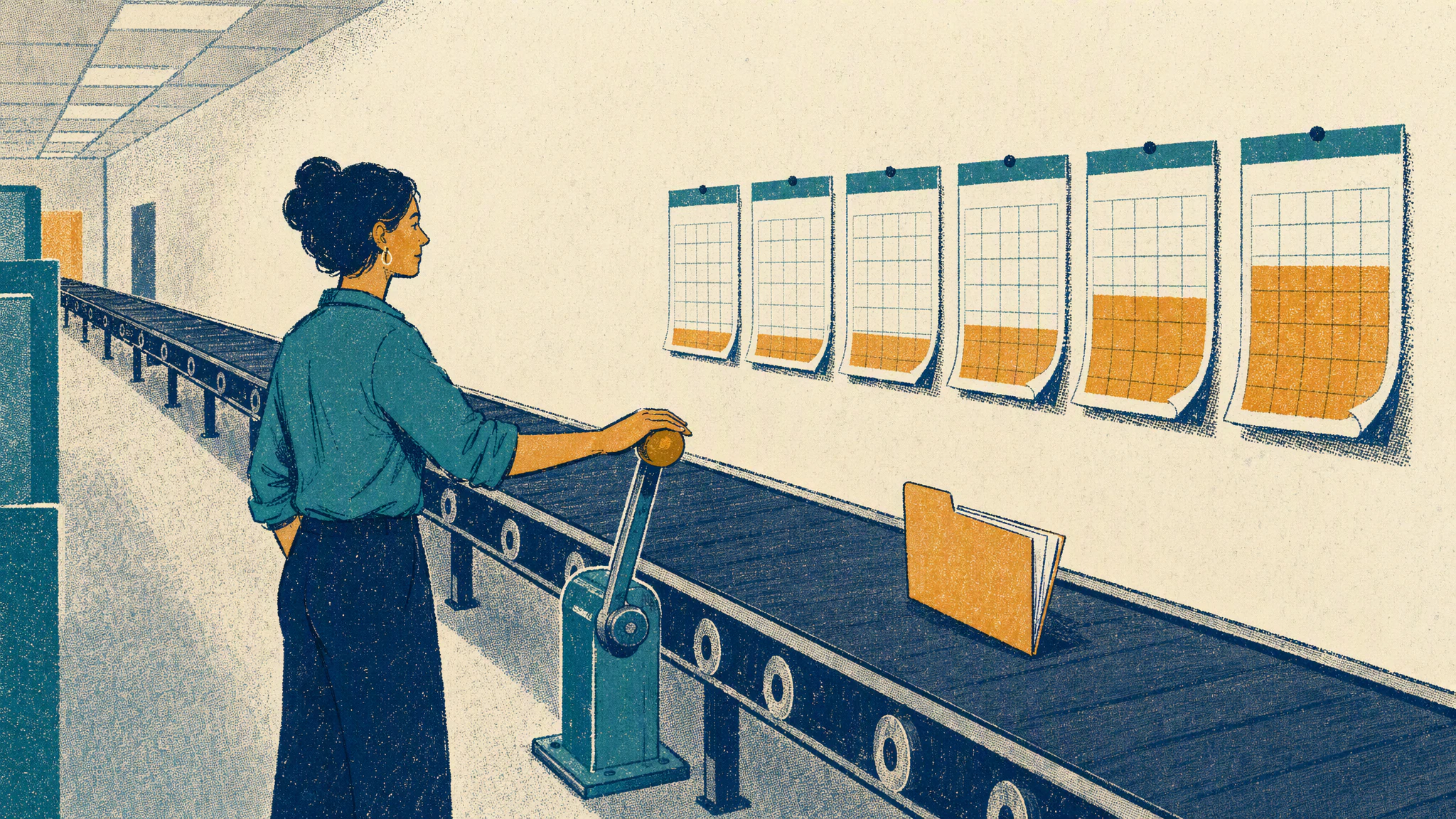
Each agent has a job, and the jobs touch
Salesforce's September 11, 2026 announcement introduces its job-ready Agentforce agents by the job each holds. Casey handles customer service, including returns and escalations, over voice, SMS, WhatsApp, and web chat. Paige takes IT and HR requests from employees, Carter helps shoppers compare products and check out in the chat, Piper qualifies inbound B2B leads, Hunter works outbound pipeline from research through outreach, and Marshall runs back-office supply chain processes. Salesforce says each arrives with the skills, actions, and data models the job requires.
The line that matters most for a platform owner is about Multi-Agent Orchestration, which the post says "routes work across agents so they can operate as one coordinated team when a job crosses roles, systems, or stages." Salesforce lists it as generally available now. That sentence is the reason to read past the agent names. Nearly every customer job crosses a role or a stage, and at that point two agents with different data models share one record.
The handoff is where the record changes hands
The most obvious chain in the announcement runs from Piper to Hunter. Piper qualifies a lead that arrived through the website, and Hunter, which Salesforce says is in pilot now with general availability planned for November 2026, picks up the outreach. The post credits Piper with four times the conversation volume at Asana, and a number like that makes the downstream question urgent, because a qualified lead only has value if the next agent or person knows it is theirs.
In a conventional Salesforce org that boundary is a lead status, an assignment rule, and an owner field. When the receiving party is another agent, all three still exist, and the temptation is to skip them because orchestration routes the work. We'd push back on that. Routing tells you which agent acts next. It does not tell you who is accountable while the record sits between agents, which fields must be populated before the receiving agent may act, or what happens when that agent declines or fails partway through.
Write down what crosses the line
For every pair of agents that can touch the same record, we'd have the team write a one-page handoff contract before orchestration is switched on. It states the condition the record must meet for the handoff to fire, which fields the sending agent guarantees, and which fields the receiving agent may overwrite. It says who owns the record during the transition, whether a queue, a person, or the receiving agent itself. And it says what the receiving agent does when the record fails the entry condition, and names the person who gets that exception.
We've argued before that queued work needs a business owner, and the argument is stronger here. Suppose a return that Casey has accepted needs a warehouse action from Marshall. That record is in a queue whether anyone calls it that or not. If the answer to who owns it right now is the orchestrator, nobody gets paged when it stalls.
The human step still needs a place
The post describes Agentforce Coworker as working alongside employees across the surfaces where they work, and lists dynamic steering among the capabilities that let Hunter run over days and weeks. Neither says where a person sits in a chain between two agents, and our read is that the review point has to be chosen per handoff rather than per agent. A return Casey handles on its own may need no review at all, while the same return, once it asks Marshall to adjust stock or issue a credit, probably needs a person to see it before the second action runs. We set out that kind of decision in the human review step for agent work, and cross-function orchestration makes it unavoidable.
Cross-function work also changes what done means. When Casey closes the chat, the customer's problem may still be open, because the resolution is now Marshall's action. We made the same point about what counts as a completed case in the Winter '27 coverage. The handoff contract should say which agent's completion closes the customer-facing record and which one only closes a step.
What to ask for from the traces
The announcement lists Agent Optimizer, with general availability planned for October 2026, and says it helps teams test performance and analyse session traces. The post does not say whether a trace follows a record from one agent into the next or stays inside a single agent's session, and that is the first thing we'd ask Salesforce. If the trace stops at the agent boundary, the handoff contract is the only place the cross-function picture exists, and the receiving agent's entry check should write something to the record that a report can find.
The announcement's other question, what controls long-running work needs before anyone trusts it, is covered in our piece on long-running Agentforce work. The two questions meet at the handoff. An agent pursuing a goal for weeks will pass work to other agents many times, and each transition is a point where the goal can change hands without the owner changing.
Start with the pair that already exists
Most Salesforce teams already have one pair of functions, usually service to fulfilment or marketing to sales, where work crosses and ownership is fuzzy. Before switching on orchestration between two of the named agents, pull the last three records that stalled between that existing pair of teams and write down who should have owned each one during the gap. That list is your first handoff contract, and it will tell you more about what the Agentforce rollout needs than the agent names will.